Blog
Questions to Ask Before Selling a Luxury Bag
By
Asiya
| SEO & Content Strategist, Value Creation
Published on 31 Jan, 2026 |
Last updated at 01 Feb, 2026
Market-Level Guide To Value Protection Before It Slips Away.
A huge percentage of sellers are not at a loss because they cannot find the necessary buyer.
They have been losing money after investing in the resale business without understanding how the market prices risk.
The bag may be authentic.
The condition may feel “good.”
The brand may be strong.
And still the last bid is 15-30% lower than expected.
Such a gap is hardly caused by bad faith and arbitrary pricing.
It originates when the seller fails to ask the appropriate questions before selling it.
This guide addresses questions answered by experienced resellers and buyers, explaining how their answers impact specific offers in the luxury resale business.

What should I ask before selling a luxury bag?
Start by asking one question that occasionally serves as the foundation for price, platform, or timing:
What am I really trying to optimize?
Sellers in resale are generally optimizing one of three things:
Maximum cash
Speed and certainty
Minimal hassle and risk
Rarely do all three align.
Ask yourself honestly:
Am I willing to wait if the market requires patience?
How transparent can I be about condition, wear, and repairs?
What proof do I have to reduce the hesitation of buyers?
The importance of these answers is that uncertainty is the single biggest driver of defensive pricing, particularly in selling designer bags within a competitive market, as is the case with the Dubai market.
Knowing that there are professional buyers out there having their own thoughts to make before setting foot in the door is usually better than cleaning a bag or mending one.
How do resellers decide what my bag is worth?
Resale pricing is not intuitive.
In professional resale markets, it uses a repeatable logic, although it is not necessarily explained explicitly.
What gets evaluated first
Key principle:
Brand sets the ceiling.
Conditions and documentation decide how close you get.
That is why two bags, possibly identical, may get a drastically different offer, a trend that becomes most explicit when we are discussing resale patterns in different brands such as Louis Vuitton, Chanel, or Hermes.
(See the deeper breakdown on Louis Vuitton resale value for a concrete example.)

The Resale Risk Stack (How buyers actually think)
In the luxury resale market, the buyer pricing always works around a layered risk model:
Base value → Brand + model demand
Adjustment layer → Condition tier and visible wear
Verification layer → Authentication clarity and documentation
Liquidity layer → Expected time to resell
Risk buffer → Returns, disputes, and market volatility
This framework is why pricing performance is stable with respect to brands, regions, and platforms, despite the fact that they could be subjective or inconsistent to individual sellers.
The larger the ambiguity that manifests itself on any layer, the greater is the value that is compressed silently.
Does condition matter more than brand?
Short answer: both matter, but in different ways.
Brand determines whether buyers want the bag.
Condition determines how much they are willing to pay within that demand band.
Condition tiers as a pricing language
Every downgrade reduces the value by 10–20 percentage points on average.
This is not punishment.
It is how buyers price time, effort, and resale friction.
One of the commonest violations of values is the case of excessive conditions by the sellers.
This disconnect, along with the way to avoid it, is discussed in common mistakes to avoid when selling bags.

Should I repair my bag—or sell it as is?
This is regarded as one of the most relevant misunderstood resale decisions.
A bag that looks better does not always value better.
Repairs that can protect value
Brand-authorized spa services with documentation
Minor functional repairs that prevent a tier downgrade
Preventive care that preserves structure
Repairs that often reduce value
Third-party recoloring or edge paint
Non-original hardware replacements
DIY fixes or undocumented work
Form restoration, which distorts natural aging.
Behind the scenes: A 10-15% risk buffer is usually invoked by undocumented repairs, despite the appearance of the bag being clean.
For a full decision breakdown, see Is it worth repairing a designer bag before selling?
Authentication clarity is especially critical for brands like Louis Vuitton, Chanel, and Hermès.

Is it better to sell immediately or consign?
This decision always comes down to speed vs upside vs risk.
Ask yourself:
Do I want to be a seller or do I want to be done?
In the event of a choice, this basic guide to selling designer bags explains the trade-offs clearly when considering using consignment through sell & consign services.
Does missing packaging really matter?
Yes, but not all packaging carries equal weight.
High-impact items (can narrow buyer pool by 30–40%)
Detachable straps
Locks, keys, clochette
Authenticity cards
Original receipts
Lower-impact items (5–10% lift within the same tier)
Box
Dust bag
Care booklets
Reality:
Packaging supports confidence.
Condition determines price.
How does selling luxury bags in Dubai differ?
Dubai is a fast-correcting, globally informed resale market.
Customers in London, Paris, and New York are price sensitive.
Authentication standards are extremely high.
Inventory turnover is high
There is a 20-30% faster rate of penalization of DIY repairs compared to markets that are also slower.
Due to this, documentation and clarity are important and not presentation per se; local resale performance in Dubai is not about whether a bag was presented in an elegant manner but about the place of sale and the mode of sale of the good; a trend applied in explaining why Dubai’s elite choose Value Creation and in this overview of where to sell luxury items.

What mistakes cost sellers the most money?
The biggest errors are those that are hardly dramatic. They are subtle.
Over-estimating condition (−10–20% instantly)
Putting money into faulty repairs.
Inadequate disclosure of odor or stains.
Pursuing headline price over net outcome.
Timing out in the softening market.
Each one shifts the leverage before negotiation even begins.
It is always important to know which designer bags hold value best so that realistic expectations can be developed at the very beginning.
Why do these patterns repeat across the luxury market
These pricing behaviors are not unique to handbags.
In watches, jewelry, and other luxury assets of high value, the resale markets all boil down to the latter:
Uncertainty lowers value
There is more confidence with documentation.
Patience is defined by liquidity.
This is among the factors that make this logic of pricing available in auction houses, dealer buyouts, and personal resale platforms, although outward processes are not similar in this instance.
Final takeaway
It is not about perfection when selling a luxury bag.
It’s about clarity.
You don’t have to be in the ideal state.
Not all the accessories are necessary.
You do need to ask the right questions early, before the market answers them for you.
That is how value is preserved before it fades away unconsciously.
More in The Journal

How Can You Tell If A Burberry Bag Is Real
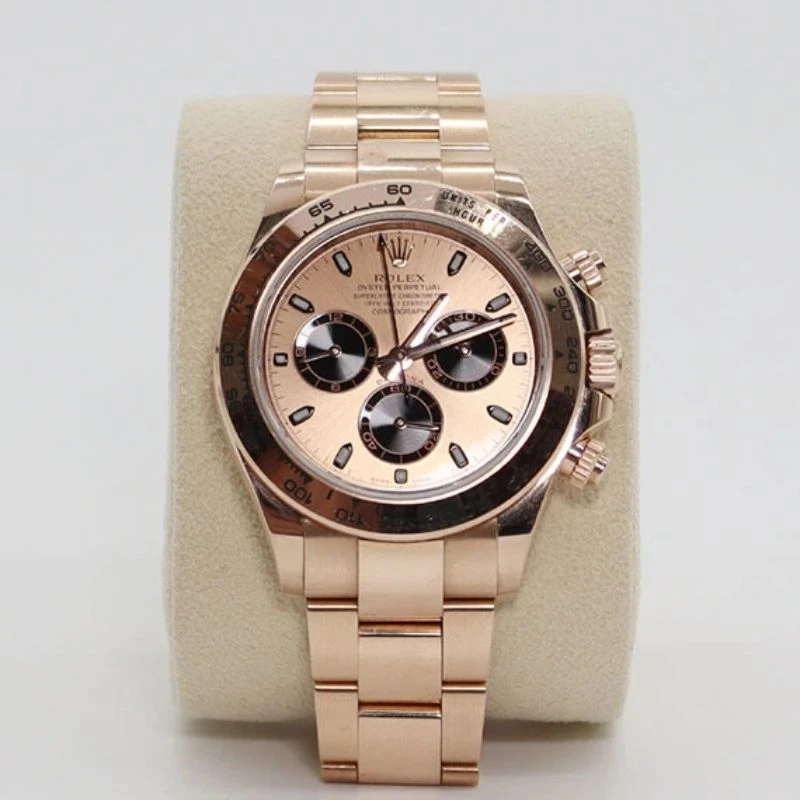
6 Iconic Rolex Models You Should Know

Cristiano Ronaldo Unveils His Million-Dollar Bugatti Watch: A Masterpiece by Jacob & Co.