Blog
What Makes a Brand Investment-Safe in Luxury Resale Market
By
Asiya
| SEO & Content Strategist, Value Creation
Published on 05 Feb, 2026 |
Last updated at 06 Feb, 2026
When someone in the luxury world calls a brand “investment-safe,” they’re usually asking one simple question:
“If I decide to sell this bag later, will my money be protected?”
At Value Creation UAE, we hear this all the time. Many sellers step into the market assuming that a famous name automatically guarantees a high resale price. Unfortunately, that’s not how it works.
In the luxury resale world, “investment safety” isn't about hitting a jackpot or seeing massive appreciation. It’s about minimizing loss, staying liquid, and avoiding sharp price corrections.
Only a tiny fraction of brands (and an even smaller number of specific bags) actually meet this high bar.

What “Investment-Safe” Means in Luxury Resale
Financial markets and luxury closets define "safety" differently.
To a resale professional, an investment-safe brand is one that:
Loses value slowly rather than overnight.
Sells consistently without sitting on a shelf for months.
Maintains a predictable "floor" price that doesn't bottom out.
To put it into perspective:
a low-risk brand usually holds 70–100% (or more) of its retail value after 2-3 years.
On the other hand, high-risk brands can lose 30–50% the moment you walk out of the boutique.
One thing that we constantly see with sellers is that they think every luxury bag will behave the same way. If you want to avoid these types of mistakes when selling your bags, see our guide for more information on the common mistakes to avoid when selling bags.
Stability Matters More Than Upside
Most buyers are looking for "upside"—the chance that a bag will become worth more than they paid.
Professionals, however, look for stability.
A safe brand is valuable because it can survive a slow market and absorb an increase in supply without the price tanking.
In short: certainty is better than hype. A bag that sells quickly at a steady price is a much safer bet than one that might go up but could just as easily crash.
How Brand Control Shapes Investment Safety
The biggest factor in resale safety is how tightly a brand controls supply.
Limited Production: Brands that play hard-to-get have much less price volatility.
Mass Production: High availability leads to market saturation, which eventually pushes prices down.
Design consistency is also key. Brands that stick to the same silhouettes and materials for decades reduce the risk of a bag looking "dated." You can see how this works in practice by looking at our breakdown of the luxury fashion pyramid.

Brand Categories and Investment Safety
Hermès — The Gold Standard
Hermès is the undisputed leader in resale safety for three reasons:
production is strictly limited
demand is global
the designs are timeless.
Icons like the Birkin and Kelly frequently retain 100–200% of their retail value. This is why we often see sellers weighing these two specifically, as we noted in our Kelly vs. Birkin comparison.
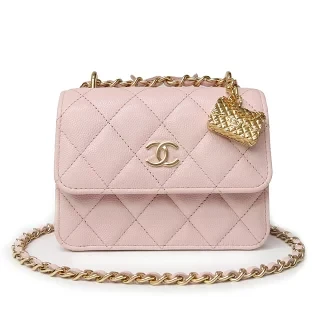
Chanel — Safe (With a Catch)
Chanel is generally a safe bet, but mostly for the "Classics."
Regular retail price hikes help prop up the resale market for Classic Flap bags, but this doesn't usually apply to seasonal or trendy pieces.
You can see the impact of these price jumps in our analysis of how expensive Chanel bags really are. Typically, classics retain 80–110% of their value.
Louis Vuitton — Moderate Risk
LV is a mixed bag. Because they produce at a much higher volume, the supply risk is higher.
Icons like the Neverfull or Speedy are reliable (70–90% retention), but trend-heavy collaborations are much more volatile.
For a deeper look, see our Louis Vuitton resale value guide.

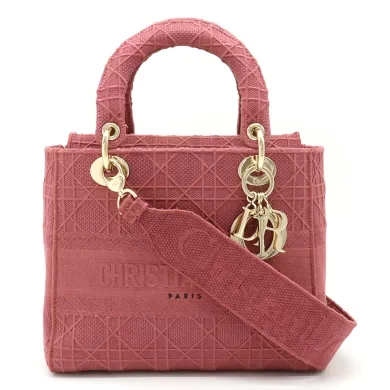
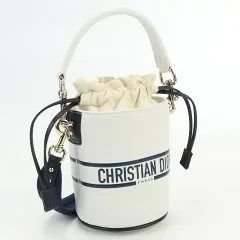
Gucci and Dior — Higher Risk
Trendy-driven brands have an increased risk of losing value quickly.
When trends shift, popularity fades faster than the supply can disappear. It’s common to see retention drop to 30–60%.
This is a classic example of why popularity doesn’t always mean protection—a topic we explore in Gucci vs. Louis Vuitton.
Supply Risk: Why Popularity Is Not Protection
A lot of people are sporting different brands, but this does not mean their items will be secure. With a large influx of a specific model through secondary sellers, there will often be price drops of as much as 20% in only a few weeks.
The "days-to-sell" metric offers insight into how sought-after a specific bag is; however, if it has remained in stock for longer than two months, it may be oversupplied. Something sellers encounter when deciding where to sell luxury items and how fast pricing adjusts.
Condition Sensitivity Varies by Brand
Wear and tear affect every bag, but some brands handle it better.
Hermès and Chanel are more "forgiving," usually losing only 10–15% of value for light wear.
Louis Vuitton and Gucci can see a 25–40% drop for the same level of use.
Material also plays a role—structured leathers generally hold their value better than canvas or soft suedes. This often leads to the question: Is it worth repairing a designer bag before selling? The answer depends entirely on the brand.
Timing Still Matters — Even for “Safe” Brands
Even the "safest" brand can't escape a bad economy or a sudden shift in the market. Even historically strong brands can weaken due to:
Economic slowdowns
Supply spikes
Post-hype cycles
In many cases, timing matters more than brand, which is why sellers sometimes exit earlier instead of holding indefinitely.

Common Seller Misconceptions
Many sellers get stuck holding an item because they:
Confuse "famous" with "stable."
Think the brand name will make up for heavy wear.
Miss the peak resale window.
This leads to inflated expectations around “investment bags,” a topic we address in best designer bags to invest in, where the limits of investment thinking are explained clearly.
A Practical Framework to Judge Investment Safety
Before buying or holding a bag, resale professionals ask:
Are the days-to-sell under 30 at current pricing?
Does resale retention stay above 70% after two years?
Is there a real scarcity mechanism, not marketing scarcity?
Simply put, liquidity is more important than speculation when it comes to luxury products. Therefore, anytime a luxury company has an established exit plan, rather than just purely marketing hype about its brand name, it is likely to be a profitable investment.
FAQs
Q1: Are luxury bags real investments?
Only a small group qualifies. Most luxury bags depreciate.
Q2: Which brands are safest overall?
Hermès first, followed by Chanel classics, then select Louis Vuitton icons.
Q3: If a brand is popular, is it safe?
Not necessarily. High popularity often leads to high production, which can cause value to crash once the trend passes.
Q4: Is timing more important than the brand?
Often, yes. Even a great bag sold at the wrong time (during a market correction) will lose money.
More in The Journal
The Ultimate Guide to Celine Belt Bag Sizes: Find Your Perfect Fit

Rolex Oyster Perpetual vs Datejust
Average Price of a Birkin Bag