Blog
Real vs Fake Gucci Shoes
By
Asiya
| SEO & Content Strategist, Value Creation
Published on 04 May, 2026 |
Last updated at 04 May, 2026
The safest way to tell if Gucci shoes are real is to inspect them part by part.
The footbed, insole, heel branding, stitching, materials, sole, and overall finish should all make sense together. A box, a dust bag, or a reassuring code should only support that judgment, not decide it.
That matters even more in the pre-owned market, where a pair can look right in a listing and still feel wrong once you slow down and inspect it carefully.
How Can You Tell If Gucci Shoes Are Real?
Start with the shoe itself, not the extras around it. Look at the footbed and insole first. Then move to the heel branding, stitching, materials, and sole.
On an authentic pair, those details feel aligned. The text looks clean, the finish looks controlled, and the materials do not feel cheap or rushed.
A simple rule helps here:
Do not ask whether one detail looks real. Ask whether the whole pair still looks right as you keep checking.
If one area looks convincing but the next one starts slipping, that matters.
Don't Rely On One Detail
A convincing fake gets one thing right.
Sometimes it is the box.
Sometimes it is the dust bag.
Sometimes it is the logo in the seller’s best photo.
That is where buyers get pulled in.
One Good Sign Is Not Enough
A clean logo does cancel out weak stitching.
A polished box does not fix a poor insole stamp.
A convincing code does not make the whole pair believable.
What matters more is consistency.
What To Look For Instead
As you move through the pair, ask:
Does the inside text still look right?
Does the heel branding still hold up?
Does the stitching match the quality the logo suggests?
Do the materials feel as convincing as the photos did?
If one area looks strong but the rest starts slipping, pay attention.
Authentic Gucci shoes usually feel coherent from one checkpoint to the next. Fake pairs often start falling apart once you move past the most obvious detail.

Start With The Footbed And Insole
If you are checking Gucci shoes in person or through listing photos, start inside the shoe.
That is often where fake pairs begin to lose control.
A pair can look convincing from the outside and still feel wrong once you inspect the footbed and insole properly.
The branding here should look clean, balanced, and intentional.
If the text looks weak, awkwardly spaced, too bold, too faint, or poorly finished, do not ignore it just because the outer logo looks better.
What To Check First
Look at the “GUCCI” stamp, the “made in Italy” text, and the finish around them.
You are not just checking whether the words are present. You are checking whether they look like they belong there.
Ask yourself
Does the text look clear rather than muddy?
Is the spacing between lines even?
Does the stamp look properly placed, not careless or crooked?
Does the footbed pattern, if present, look consistent rather than off in color, scale, or finish?
In Gucci, major resale and authentication guides repeatedly point to the insole, footbed, and text finish, because fake pairs often lose accuracy there before they do in the outer branding.
What Looks Wrong on Fake Pairs
This is where counterfeit pairs often start slipping.
The text may look too thin or too heavy.
The spacing can feel cramped.
The print can look shallow, faded, or slightly off-center.
On patterned styles, the footbed can look wrong in tone or proportion, even if the outside still looks passable.
That is why the inside of the shoe matters so much.
It is one of the easiest places to separate a pair that only photographs well from one that holds up under inspection.
If you want to understand how Gucci markings and finishing details can help authenticate categories, this guide to spotting authentic Gucci details addresses that issue.
Check The Heel Branding And Rear Construction
Once the insole looks believable, move to the back of the shoe.
The heel area is one of the clearest places to compare a real luxury finish with a weak replica.
If the rear branding looks close enough at first glance, but the shape, spacing, or finish feels off once you zoom in, trust that instinct.
Heel Logo And Rear Patch
Slow down and check the logo as a shape, not just a name you recognize.
You want the branding to look controlled. The letters should feel evenly formed.
The spacing should look deliberate
The patch should sit cleanly against the shoe
The finish should not look cheap or badly attached
If the logo looks close enough, but the patch around it feels clumsy, that is still a warning sign.
Rear Stitching And Finish
Then look at the stitching around that same area.
This is where fake pairs often stop looking convincing. The stitching may be:
too thin
too long
unevenly spaced
visually messy around the patch edge
If the branding looks expensive but the construction around it does not, trust the construction.
Real luxury footwear is not just about recognizable branding. It is about whether the whole section looks properly made.

Look Closely At The Materials And Stitching
This is where luxury judgment matters more than logo recognition.
Authentic Gucci shoes should not just look branded; they should feel it, too. They should look well-made.
The leather, coated canvas, trim, and decorative finishes should feel believable for the brand and price point.
What Real Quality Tends to Look Like
You are looking for control.
That shows up as:
even stitching
no obvious glue residue
edges that look clean rather than rough
leather or canvas that looks intentional, not plasticky
trim that feels matched to the rest of the shoe
When it comes to luxury shoes, the finish should not feel rushed.
The RealReal’s Gucci Ace guide describes authentic pairs with clean construction, even stitching, and no visible glue where the upper meets the sole, as well as better-finished materials and details.
What Makes Fake Pairs Look Cheaper
Counterfeit pairs often give themselves away in the small build details:
glue where it should not be visible
seam lines that wander
stitching that changes in length or tension
materials that feel too shiny, flat, or synthetic
decorative details that look attached rather than integrated
If the branding looks expensive but the build does not, believe the build.
That same quality gap shows up across other luxury categories, too, which is why readers often find it useful to compare this with another luxury authenticity breakdown.

Review The Sole, Pattern, And Hardware
Once the upper looks promising, move down.
The sole, lower construction, and decorative details often tell you whether the pair was built with real care or only styled to look convincing from above.
Sole and Lower Construction
Look at the shape first.
Does the shoe sit the way it should? Does the lower build look deliberate? Does the underside look finished rather than stamped out cheaply?
Red flags here include:
a flat or crude-looking bottom
weak tread definition
poor underside finishing
a sole that feels disconnected from the quality of the upper
If the pair looks expensive from the side but basic underneath, that mismatch matters.
GG Pattern, Stripes, And Decorative Details
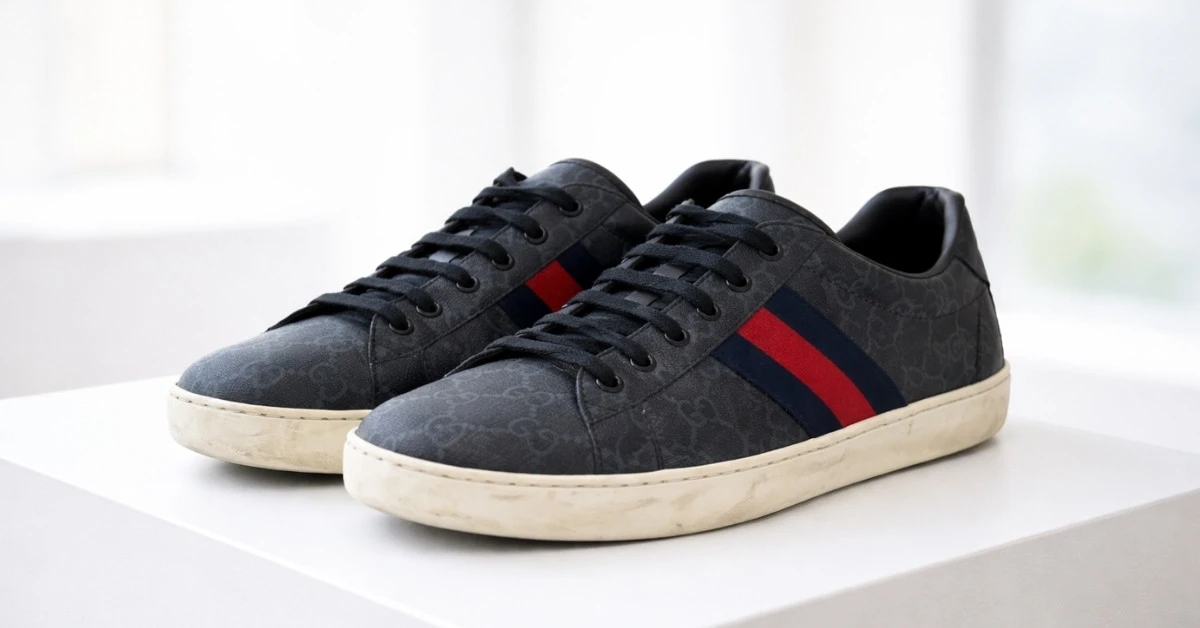
If the pair uses GG canvas, Web stripes, embroidery, or hardware, it slows down even more.
Those details should not just be present; they should be present. They should be well executed.
For example
GG pattern spacing should look controlled; stripes should not feel cheaply shiny; if the finish is more matte, eyelets should look properly fitted; embroidery should look neat and intentional; and hardware on loafer styles should not feel loose or poorly colored.
If th.e detail is supposed to elevate the shoe but instead looks like an add-on, that is a problem.
Use Serial Numbers And Packaging as Supporting Proof
Serial numbers matter. Packaging matters. They just should not do the whole job for you.
A code inside the shoe can help when it looks properly placed and well finished. A branded box or dust bag can support the overall picture.
But neither should overrule visible problems in the shoe itself.
That is where buyers get misled. They see one reassuring detail and stop checking.
Where This Check Fits In The Process
Use serial numbers and packaging at the end of your review, not the beginning.
First, decide whether the insole looks right
The heel branding holds up
The stitching looks controlled
The materials feel believable
The sole and details still make sense
Then let the code and packaging confirm what the shoe is already telling you.
If you publish a dedicated serial-number explainer, this section is where a soft internal link belongs.
Until then, it is better to keep the advice plain than force an awkward anchor into the page.
Quick Comparison Guide
If you are scanning a pair, use this as a fast reality check before you get pulled in by the branding.
Do Gucci Shoes Have Authenticity Tags Or NFC Features?
Do not assume they do.
Gucci offers an official Authenticity Tag experience through the Gucci app.
Still, the brand notes that it is available only on select products, including bags, silks, scarves, and travel items.
Gucci does not present it as a universal verification system for all shoes.
That matters because buyers sometimes hear “Gucci has NFC” and interpret it as “all Gucci shoes can be scanned.” That is not a safe assumption.
So if a seller implies that the pair should be digitally verifiable just because it is Gucci, pause there.
The safer approach remains: inspect the pair itself, ask for request photos, judge the value carefully, and use expert authentication when the price justifies it.

Where Should You Buy Gucci Shoes to Lower the Risk of Fakes?
The buying channel matters almost as much as the shoe.
If you are buying new, official Gucci channels are the lower-risk route.
If you are buying pre-owned, the better question is not just where, but under what conditions.
What a Safer Seller Provides
Look for:
clear close-up photos of the actual pair
photos of inside stamps and heel details, not just the side profile
a transparent authentication process
a return or dispute path that means something
answers that stay specific when you ask about condition, origin, and details
If a seller avoids the inside of the shoe, avoids the heel, or keeps repeating the same generic reassurance, that is a problem.
This is also where a related reason, like “where to shop for vintage luxury more carefully,” fits naturally.
The same resale logic applies: trust the evidence more than the seller's story, and trust consistency more than one polished detail.
Why Resale Trust Still Matters
A pair can look right in photos and still be wrong in person. That is why clear evidence matters more than marketing language.
If the listing feels vague, the photos avoid the areas that matter most, or the price only makes sense if the pair is fake, step back. There will always be another pair.
If you want a softer trust-building destination for readers already in the Dubai resale space, this is also the right place for a trusted Dubai resale option.
When to Walk Away From a Pair
Sometimes the smartest authentication move is not another comparison. It is leaving the listing alone.
Walk Away If
Multiple details look off at once
The seller avoids close-ups of the inside of the shoe
The heel branding looks decent, but the stitching and finish do not. Theing looks more convincing than the pair
The price only makes sense if the pair is fake
The seller cannot answer basic questions clearly
That last point matters more than many buyers realize.
A trustworthy seller may not know every technical detail, but they do not avoid simple questions about condition, photos, purchase history, or authentication steps.
If you still like the pair, but the doubt is not going away, do not push through it just because the listing is still available.
On popular Gucci styles, hesitation is often useful.
Final Takeaway
The best way to judge real vs fake. Gucci shoes are to slow the pursuit down with the footbed and insole.
Then move to the heel branding, stitching, materials, sole, and finishing. Use serial numbers and packaging as support, not proof.
And do not let one reassuring detail carry the whole decision.
A real pair feels coherent from one checkpoint to the next, and a fake pair asks you to ignore something.
More in The Journal

How To Verify Gucci Serial Number
What is a Luxury Brand
Dior Shoe Size Chart