Blog
Korean Bag Brands Worth Knowing
By
Asiya
| SEO & Content Strategist, Value Creation
Published on 15 Sep, 2026 |
Last updated at 16 Sep, 2026
Korean bag brands have a lot more going on than you might think. Stand Oil is great for simple, everyday styles, OSOI is known for its unusual shapes, Marge Sherwood focuses on leather bags, and Samo Ondoh is a good pick if you like practical designs with plenty of pockets.
And if you shop from well-known luxury bag labels, Korean brands are worth a look. You’ll find plenty of well-designed bags without everything revolving around a logo, whether you care more about the shape, material, or how practical the bag is.

10 Korean Bag Brands to Know in 2026
If you only want a quick shortlist:
For sculptural shapes: OSOI
For an everyday shoulder bag: Stand Oil
For leather with a worn-in finish: Marge Sherwood
For pockets and laptop space: Samo Ondoh
For soft hobo shapes: Archivépke
For a polished structured bag: LOEUVRE
For clean, pared-back shapes: Nothing Written
For lower-priced casual styles: Matin Kim
For structured totes and shoulder bags: Monde Monde
For minimal leather designs: Atelier de LUMEN
1. Stand Oil

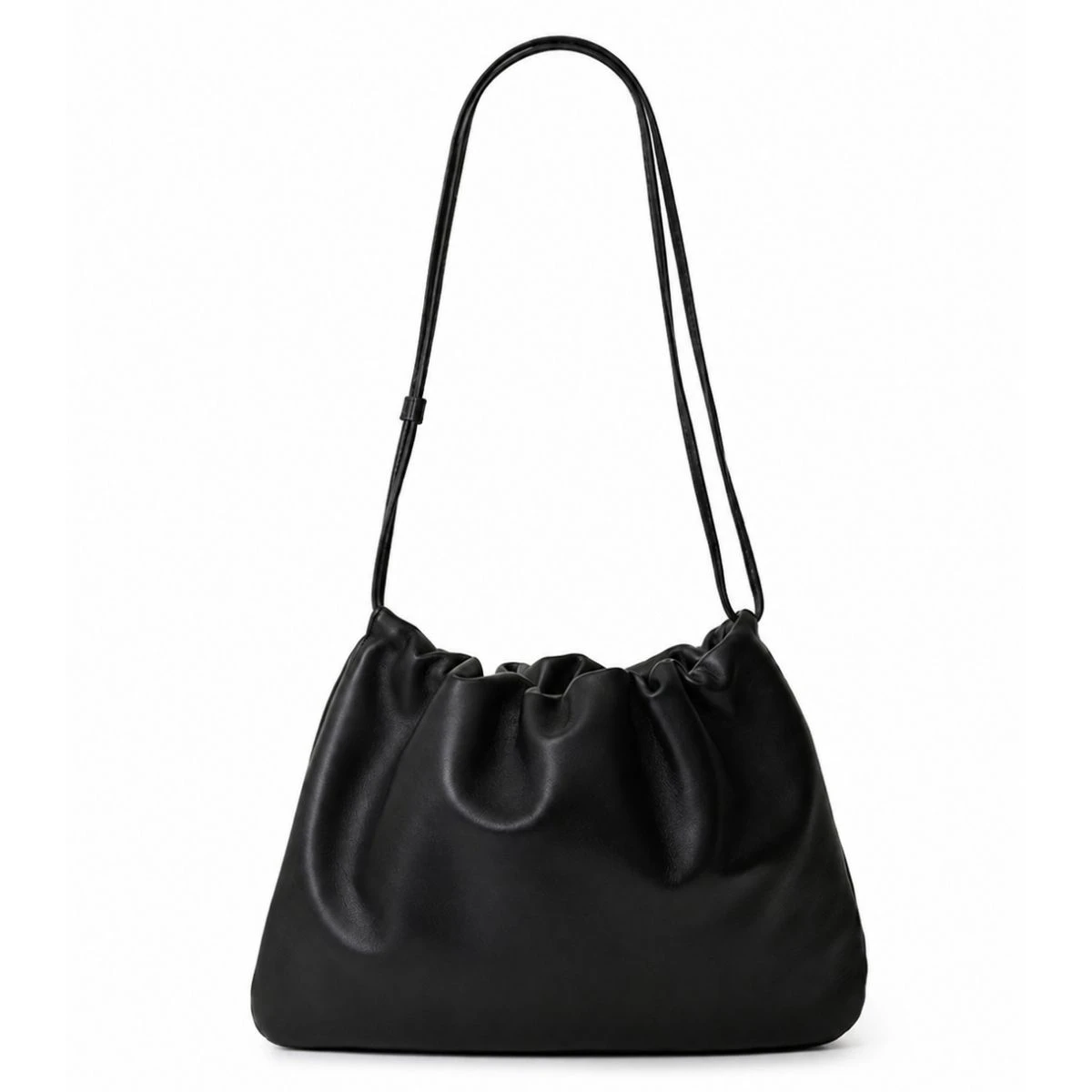
Stand Oil sits at the casual end of this list. Its global store carries the Mushy, Breezy, Mingle, Lene and Velow families, with plenty of soft shoulder-bag shapes.
The Mushy feels more relaxed than the structured bags further down this list. It suits everyday wear, especially if you want something easy to pair with denim, simple separates or workwear.
Check the exact material before ordering. Photos alone don't tell you whether a bag uses natural leather, artificial leather or another material.
2. OSOI

OSOI is the label to look at when a silhouette catches your eye before branding does.
Its bag range includes Boat Brot, Folder Brot, Pecan Brot and Boat Mini designs. The curved forms and compact proportions give the collection a more sculptural look than a standard flap bag or tote.
OSOI also sits above the lower-priced brands in this list. It suits someone buying for the design rather than looking for a low-cost everyday bag.
Check the measurements before ordering. Small, structured bags can be harder to judge from photos than a roomy tote.
3. Marge Sherwood

Marge Sherwood puts more attention on leather and how it wears over time.
Its collection includes Soft Boston, Soft Bowling, hobo, and tote shapes. One Soft Boston EW is made in Korea from vegetable-tanned pull-up cow leather.
The brand notes that folds and scratches can become lighter over time, while the washed finish may transfer some oil onto pale clothing. If you're drawn to understated designer bags, Marge Sherwood has some of the same logo-light appeal, but the washed textures stop it from feeling too polished.
4. Samo Ondoh

Samo Ondoh makes more sense when you look inside the bag.
The Pocket Utility L measures about 40.5 × 27 × 10 cm and has front zip pockets, side pockets, an inner zip pocket and an adjustable shoulder strap. Samo Ondoh says it can hold a 16-inch Mac.
It weighs about 590 g empty, and the outer material is artificial leather rather than natural leather. The bag is made in Korea.
For someone carrying a laptop, bottle, and smaller daily items, the storage may be the main reason to choose it. If you specifically want natural leather, it won't be the right match.
5. Archivépke

Archivépke is strong on softer shapes.
The Fling range includes hobo and smaller shoulder versions, while the wider collection also includes Took, Knotted Layer, Luv Moon and Ridge bags. The range moves across nylon, suede, fabric, mesh and other finishes.
The hobo shapes sit softly against the body. For a firmer, more structured bag, OSOI or LOEUVRE are better comparisons.
6. LOEUVRE

LOEUVRE's bags are neater and more structured than many of the softer styles above.
One of its better-known designs is the Sac de Cle Medium. The official Korean store lists the model at ₩349,000.
CNA Lifestyle's 2026 coverage describes the Sac de Cle as wearable as a shoulder bag, tote, or crossbody, with three interior compartments.
The divided interior may suit you better if you dislike one large open compartment. Material and country of manufacture should still be checked for the exact model you're considering.
7. Nothing Written

Nothing Written keeps the shapes simple and the branding restrained.
Its bag range includes Soft Flap shoulder bags, Vernis totes and Kate bowling bags. These are familiar shapes, which can be a strength if you want something that slips easily into an existing wardrobe.
Several bags shown on the official store were marked out of stock when checked, including the Soft Flap and Kate Bowling styles.
If you have one model in mind, check the brand directly before assuming it's still available.
8. Matin Kim

Matin Kim is noticeably more casual than OSOI, LOEUVRE or Marge Sherwood.
Its bag category includes canvas eco bags, shirred shoulder bags, small hobos, bucket bags and denim styles. The range is broad, rather than built around one signature handbag.
Prices also start much lower than they do at OSOI or LOEUVRE. Some fabric eco bags are listed at $33, while several shoulder and hobo styles sit around $110 to $132.
Matin Kim suits casual wardrobes and lower budgets more than someone looking for traditional leather craftsmanship.
9. Monde Monde

Monde Monde leans toward cleaner, more structured shapes.
Its collection includes Pluma shoulder bags and totes, Magnet Clock bags, leather half-moon styles, and Doctor Totes. The range gives you more polished options than the softer Archivépke styles.
Many pieces on the Korean store were marked sold out when checked, so availability is worth confirming before settling on one model.
If you like compact shoulder bags but find OSOI too sculptural, Monde Monde sits in a useful middle ground.
10. Atelier de LUMEN

Atelier de LUMEN focuses on clean leather bags with little visible branding.
Its range includes Panier Petit, Pave Petit, Twig, Marron and Pillow styles. The brand says its pieces are designed in Seoul, and featured bags on its international store run from about $180 to $310.
Atelier de LUMEN is worth considering if you want a clean leather bag and find Matin Kim too casual or Samo Ondoh too utility-focused.
Which Korean Bag Brand Is Right for You?
Start with what you need from the bag rather than which name is getting the most attention.
For work and a laptop: Samo Ondoh's larger Pocket Utility is the clearest practical option here because the brand specifies 16-inch Mac capacity.
For a sculptural handbag: OSOI stands out for its Boat and Brot families.
For a softer everyday shape: Look at Stand Oil or Archivépke.
For leather that develops character: Marge Sherwood's pull-up leather styles are worth checking.
For something polished and structured: LOEUVRE or Monde Monde fit that direction.
For a lower entry price: Matin Kim and Stand Oil are easier starting points.
For restrained leather styling: Atelier de LUMEN is one of the stronger fits.
A bag for commuting, tailoring, and a laptop has a different job from a small shoulder bag you mainly wear at weekends.

How Much Do Korean Bag Brands Cost?
There isn't one useful price range for Korean handbag brands. The brands above sit at very different points in the market, and their stores don't all price in the same currency.
A few examples show the spread:
Matin Kim: Fabric eco bags appear from $33, while several hobo and shoulder bags are around $110 to $132.
Stand Oil: The Mingle Bag is listed at ₩79,000, the Mushy Bag at ₩129,000, and the Breezy Bag at ₩149,000.
Samo Ondoh: The Pocket Utility L is $165.
Atelier de LUMEN: Featured bags run from about $180 to $310.
OSOI: A Boat Mini is listed at ₩299,000 and standard Boat Brot versions at ₩329,000, while some finishes cost more.
LOEUVRE: The Sac de Cle Medium is listed at ₩349,000 on the Korean store.
These aren't direct like-for-like comparisons. Material, size, construction, and currency all differ, and prices can change.
A lower price doesn't automatically mean poorer design. A higher price doesn't automatically make a bag a luxury investment either.
What Materials Do Korean Bag Brands Use?
Material is one of the first things to check because the category includes much more than leather.
Natural leather: Marge Sherwood's Soft Boston EW example uses vegetable-tanned pull-up cow leather. Its finish can lighten around folds and scratches.
Artificial leather: Samo Ondoh lists the Pocket Utility L Nappa as artificial leather. The brand also warns that artificial leather can change with moisture, oils, sunlight and long-term use.
Textiles and mixed collections: Archivépke offers nylon, suede, fabric and mesh variations, while Matin Kim's range includes canvas, denim and other casual bags.
The brand name isn't enough. Check the product specification for the exact bag you're buying.
For natural leather, the finish matters as much as the leather name. Suede, smooth leather, and pull-up leather won't respond to wear or cleaning in the same way, so caring for a leather bag should start with identifying the surface correctly.
The same applies to manufacturing. A Korean brand shouldn't automatically be described as “made in Korea” unless the product itself confirms it.

Where Can You Buy Korean Bags Outside South Korea?
When buying from outside South Korea, check the brand's own store first.
Check the official store: Confirm the exact model name, size, material, price, and shipping options.
Compare established Korean fashion retailers: W Concept and Musinsa can be useful when a brand's own international store isn't convenient. Check whether the retailer ships the specific item to your country before ordering.
Be more careful with marketplaces and resale listings: Compare the item with official product information before relying on packaging, receipts, or seller descriptions alone.
International availability and return terms can change.
If you're buying outside an official or established retail channel, checking a designer bag for authenticity is more useful than treating a dust bag or shopping receipt as proof on its own.
How Do Korean Bag Brands Compare With Japanese, Chinese, Italian and French Brands?
Country is a useful context, but it isn't a quality tier.
Korean contemporary brands already range from inexpensive canvas bags to structured leather designs costing several times more. Japanese handbag labels are just as varied, while newer Chinese luxury bag brands have their own mix of modern and higher-priced designs.
European bags shouldn't be treated as one category either. Italian handbag houses include established luxury names and smaller leather specialists, while French handbag houses cover another wide part of the designer market.
A better comparison is bag against bag: material, construction, shape, usefulness, price,e and what the brand name itself means to you.
Are Korean Bag Brands Worth Buying?
They can be, especially if you're more interested in design and everyday use than buying the most recognizable logo.
Don't bundle four different questions together:
Do I like the design?
Does the material suit how I'll use it?
Is the construction and function worth the price to me?
Do I expect the bag to have resale demand later?
Those answers won't always point in the same direction.
A $100 casual shoulder bag can be a good purchase without being a luxury collectible. A $300 leather bag can be well made without having the resale demand of an established international luxury house.
If resale matters, brand recognition in the secondary market is worth considering alongside the model, condition, and buyer demand. Don't assume the original retail price will translate into a similar resale value.
For most of the labels here, design, material and usefulness are better reasons to buy than guessing what the bag may be worth later.
Which Korean Bag Brand Should You Start With?
OSOI is one of the best Korean bag brands to start with if you’re drawn to sculptural shapes. Marge Sherwood is more relevant if leather and the way it ages matter to you. Stand Oil makes more sense if you want an easier everyday purchase at a lower price.
Samo Ondoh is more practical, LOEUVRE more structured, Matin Kim more casual, and Archivépke softer in shape.
Popularity matters less if the size, material, or shape doesn't work for you.
Frequently Asked Questions
Are Korean bag brands considered luxury?
Not as a group. Korean luxury bags range from accessible fashion labels to higher-priced modern designers. Look at the individual brand, material, and product rather than treating “Korean designer bags” as a fixed luxury category.
Which Korean bag brands are good for minimalist style?
OSOI, Nothing Written and Atelier de LUMEN are useful starting points. OSOI is more sculptural, while Nothing Written and Atelier de LUMEN lean toward cleaner, quieter shapes.
Which Korean bag brands are more affordable?
Matin Kim and Stand Oil have some of the lower entry prices among the brands covered here. Matin Kim has fabric bags below $50, while several Stand Oil best sellers sit around ₩79,000 to ₩149,000.
Where can I buy Korean handbags outside South Korea?
Official global stores are the safest place to start. W Concept and Musinsa can also make international shopping easier for some brands, but check shipping, duties, and return terms for your country before ordering.
More in The Journal
A Beginner’s Guide to Investing in Bvlgari Jewelry – Timeless Luxury Worth Owning

How Much Is a Goyard Tote Bag

French Handbag Brands